

Safety at the Heart of the Global Process Industry
Solutions for Hazardous Areas (ATEX and IECEx)
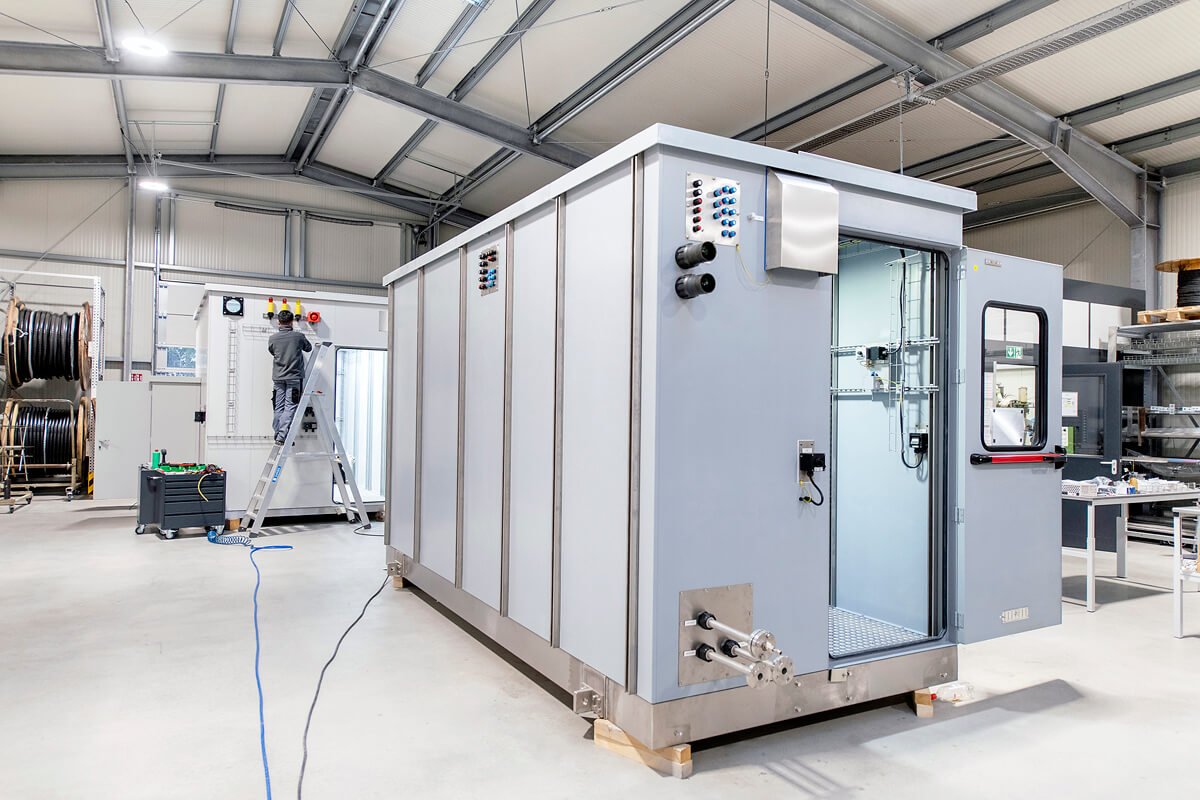
ATEX and IECEx solutions are used wherever potentially explosive atmospheres may occur due to the presence of gases, vapours, or combustible dusts.
(Petro)chemical Industry and Power Plants
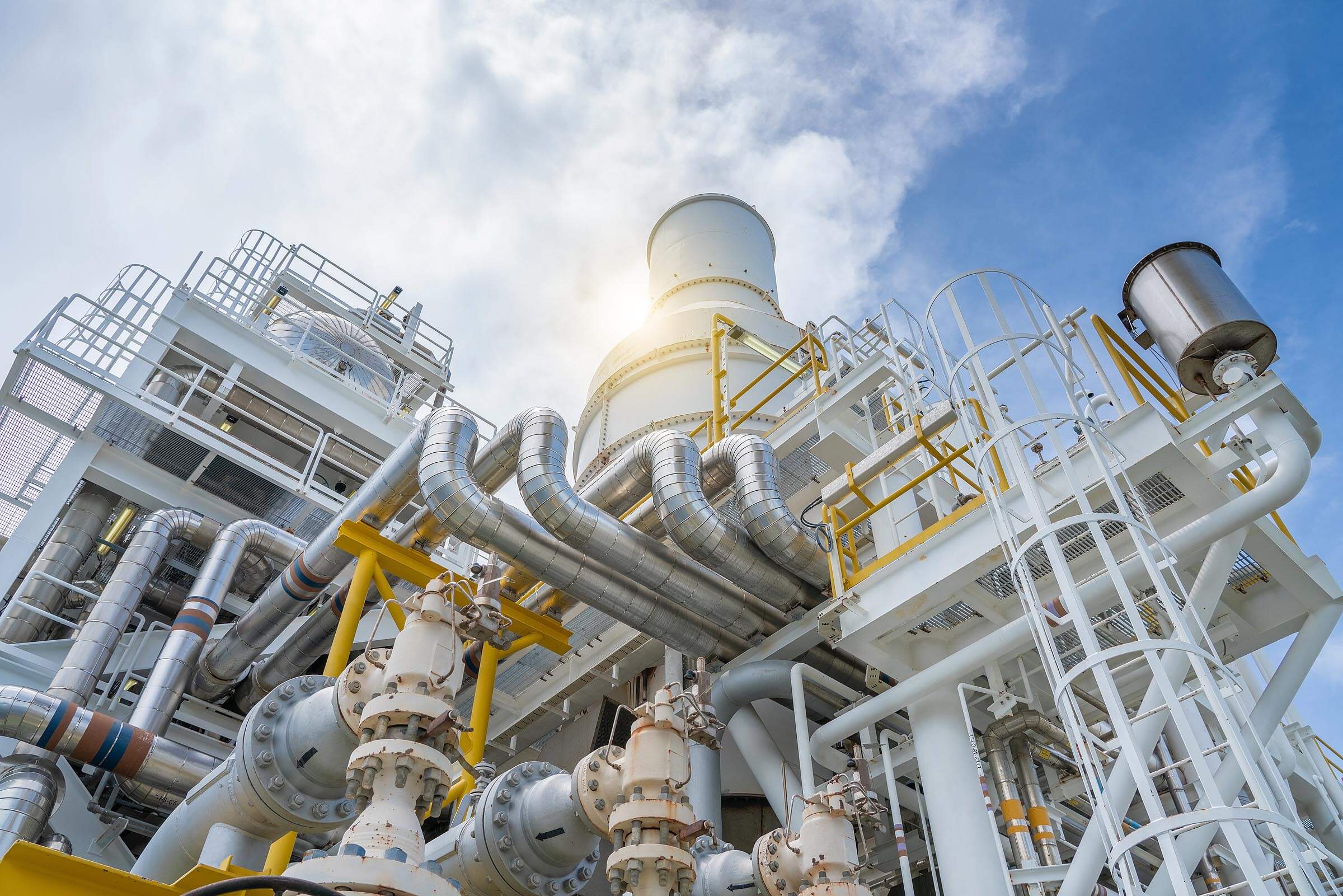
In chemical and petrochemical plants in particular, individual sample conditioning components or even complete analyser systems are often operated in hazardous areas. Most of these applications are related to process control, process optimization and process safety.
The use of explosion-proof solutions is also becoming increasingly common in power plants located in industrial parks, as well as in facilities for the incineration of industrial residues and waste. Due to the corrosive and potentially explosive substances encountered in the chemical and petrochemical industries, ATEX and IECEx components and systems are often required to meet particularly demanding operating conditions
PSG Process Probe for Hazardous Areas up to 180°C
One of the key advantages of the PSG Process Probe is that, thanks to its self-limiting heating cartridges (90°C, 150°C and 180°C), no additional controller or temperature limiting unit is required. In addition, the dissipative GRP protective enclosure provides a high degree of protection of up to IP65.
Even in applications with extremely demanding requirements for a stable extraction temperature of 180°C due to acid dew points, the self-limiting heating system ensures the required temperature is maintained, even at ambient temperatures as low as -40°C. The probe is certified for use in hazardous areas according to Zone II 2G Ex d IIC T3.
Special Filter Design for Low Maintenance
The specially designed filter surface ensures exceptionally long service life, both in applications with high dust loads and in those with very low dust concentrations – conditions commonly encountered in the process industry.
This feature enables operators of hazardous-area installations to minimize maintenance requirements and significantly reduce service times in their ATEX systems.

PSG Process ATEX – Cut-to-Length and Fully Certified
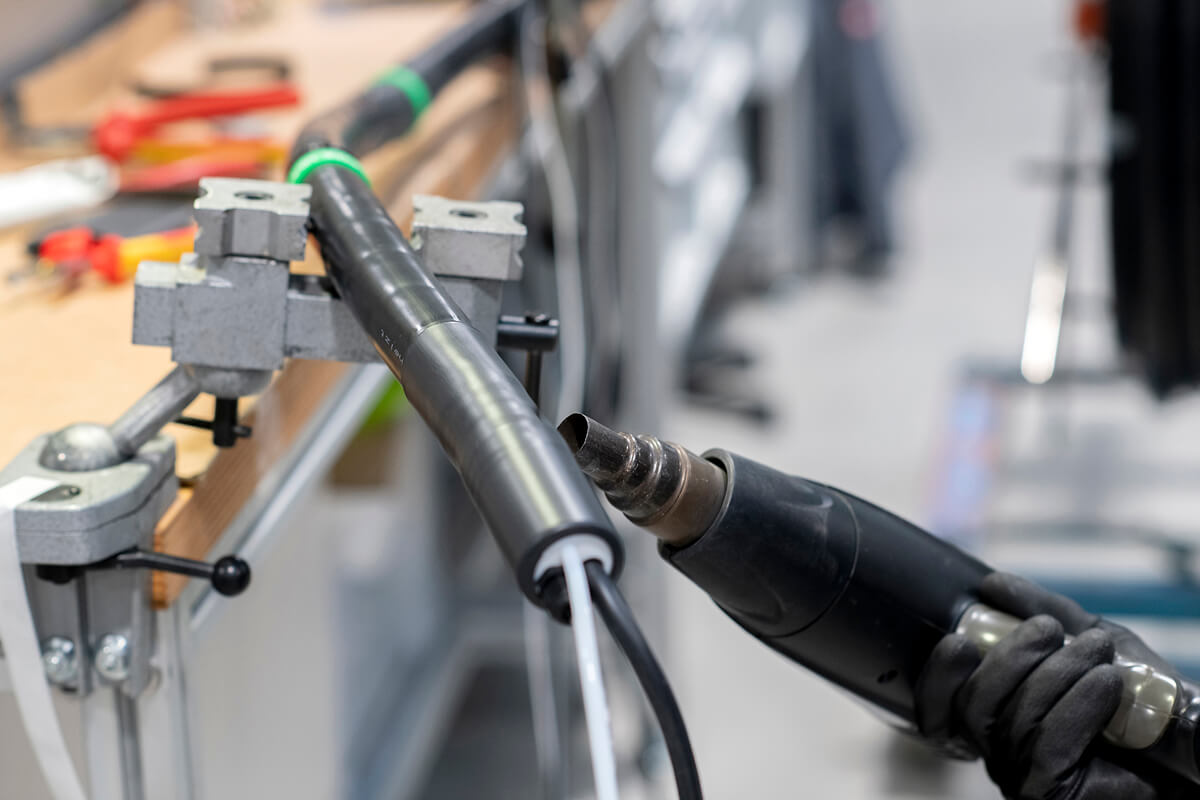
Even heated sample lines, which may appear to be simple components, must meet a wide range of requirements for use in hazardous areas. These include requirements relating to installation, routing, power supply and the electrostatic properties of the lines.
PSG Process ATEX heated sample lines, available in custom lengths, enable operating temperatures of up to 180 °C. Thanks to the convenient cut-to-length technology, the lines can be easily adapted to the exact length required for each installation.
Conductive Outer Jacket Material
This feature reduces installation effort, optimizes the use of resources and also saves energy. Thanks to highly efficient insulation technology and a maximum power output of 60 W/m, the heating tape enables energy savings of more than 50% compared with conventional solutions.
The patented fully dissipative (antistatic) outer jacket ensures that not only the heating tape itself, but the entire assembly is fully certified for use in hazardous areas.
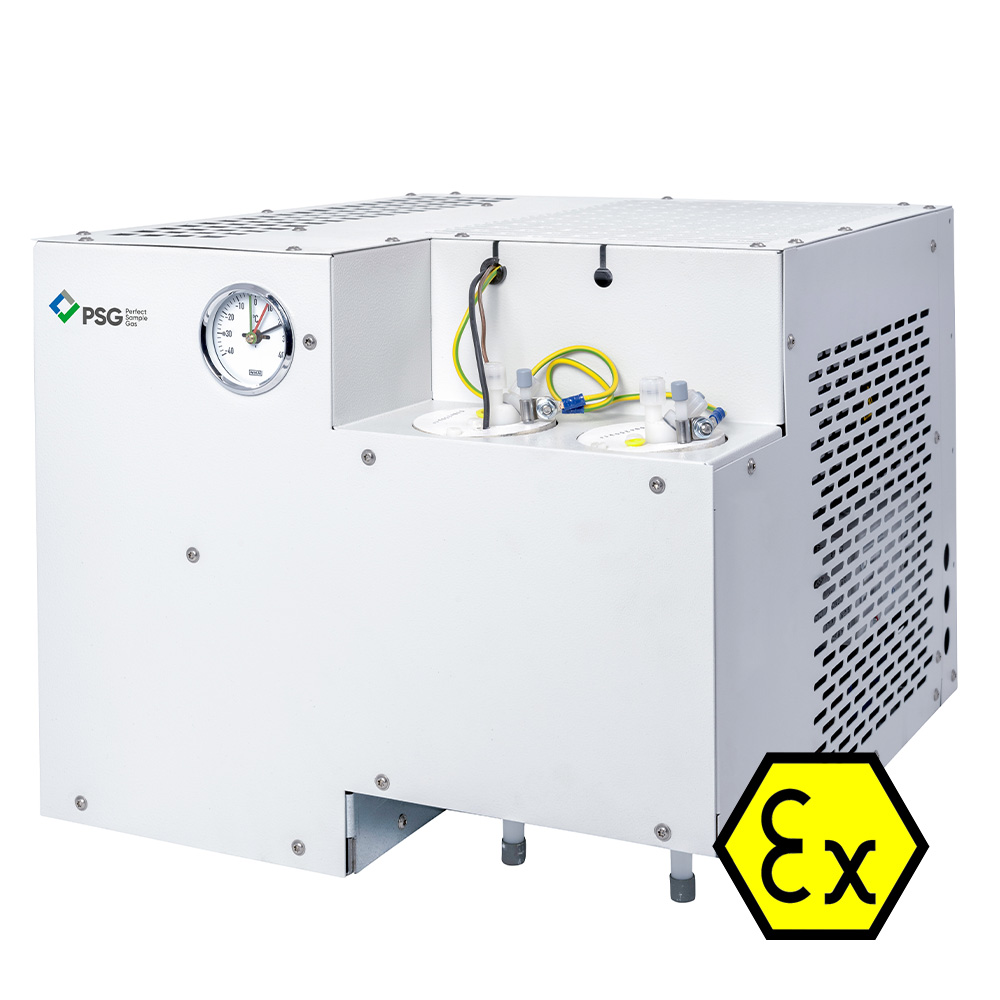
PSG Process Cooler for ATEX Zones 1 and 2
Sample gas coolers in analyser systems are often installed in non-hazardous areas. However, for critical measurements, inerting applications or the analysis of flammable gases, process coolers designed for use in ATEX Zones 1 and 2 are increasingly required.
Integrated SIL Temperature Measurement
The MAK Process combines all the key requirements of the process industry in a single device. High flow rates for reduced T90 response times, integrated SIL temperature measurement, welded gas paths and a stainless-steel heat exchanger ensure maximum safety and reliable operation of the sample gas cooler.
ATEX Compressor Cooler
For applications in hazardous areas, PSG Process Coolers are approved for use up to ATEX Zone 1 and provide efficient cooling for one to four sample gas paths.
Cooling is provided by a compressor-based system, ensuring stable and low outlet dew points even at high ambient temperatures.
Our Top Products
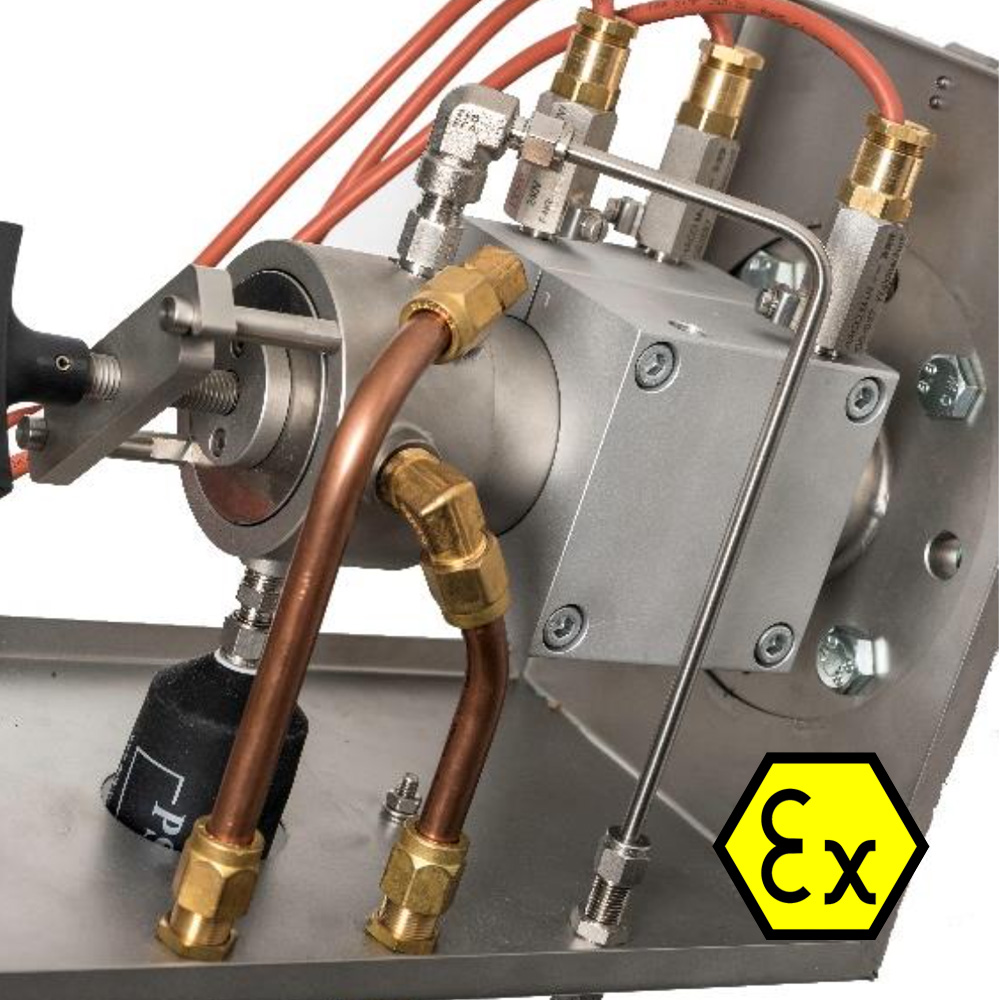
Self limiting Probe with 90 °C holding temperature with explosion proof for ATEX Zone 1 II 2G Ex d IIC T3 Gb

Self limiting Probe with 180°C holding temperature for use in IP 65 housing and explosion proof for ATEX Zone 1 II 2G Ex d IIC T3 or IECEx
Self limiting Probe with 180°C holding temperature for use in IP 65 housing and explosion proof for ATEX Zone 1 II 2G Ex d IIC T3 and IEcEX
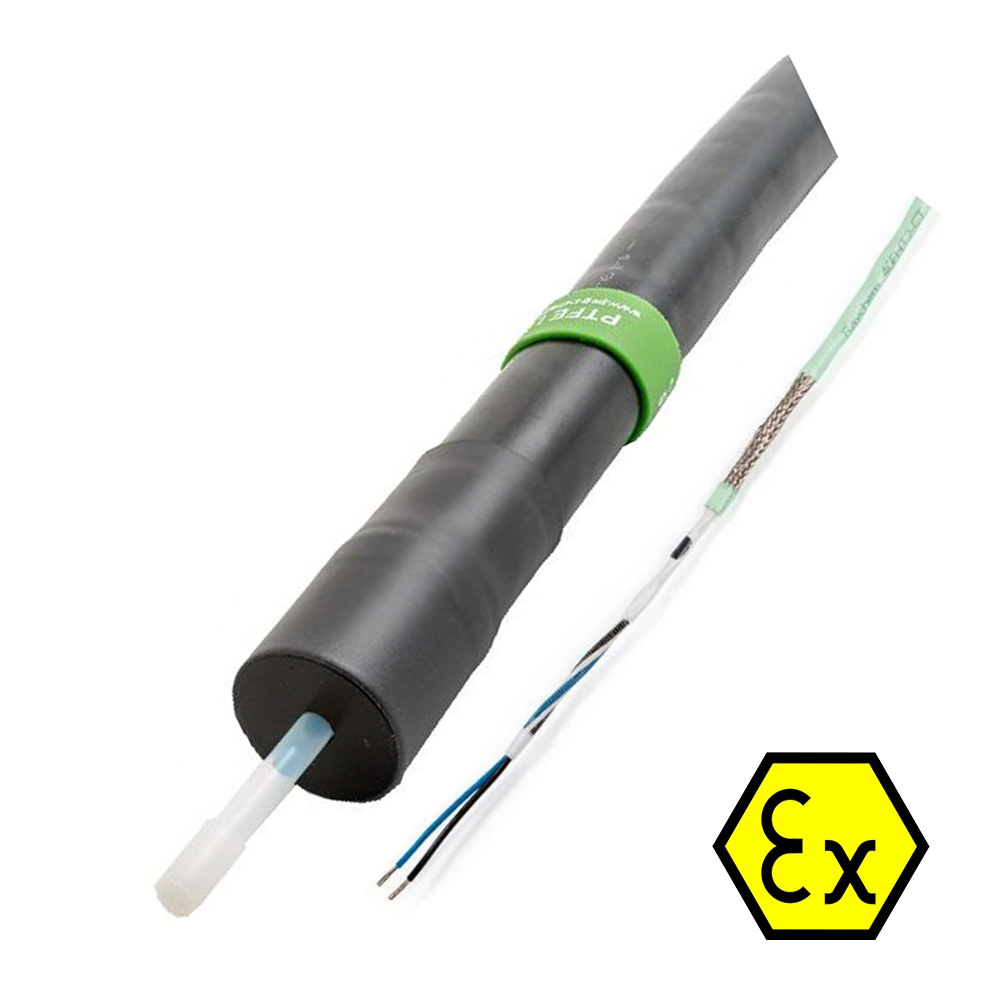
Controlled Sample Line up to 150°C holding temperature, cut-to-length with PTFE / PFA or stainless steel tubes, heating cable certified for ATEX Zone 1: II 2G Ex IIC und IEcEX
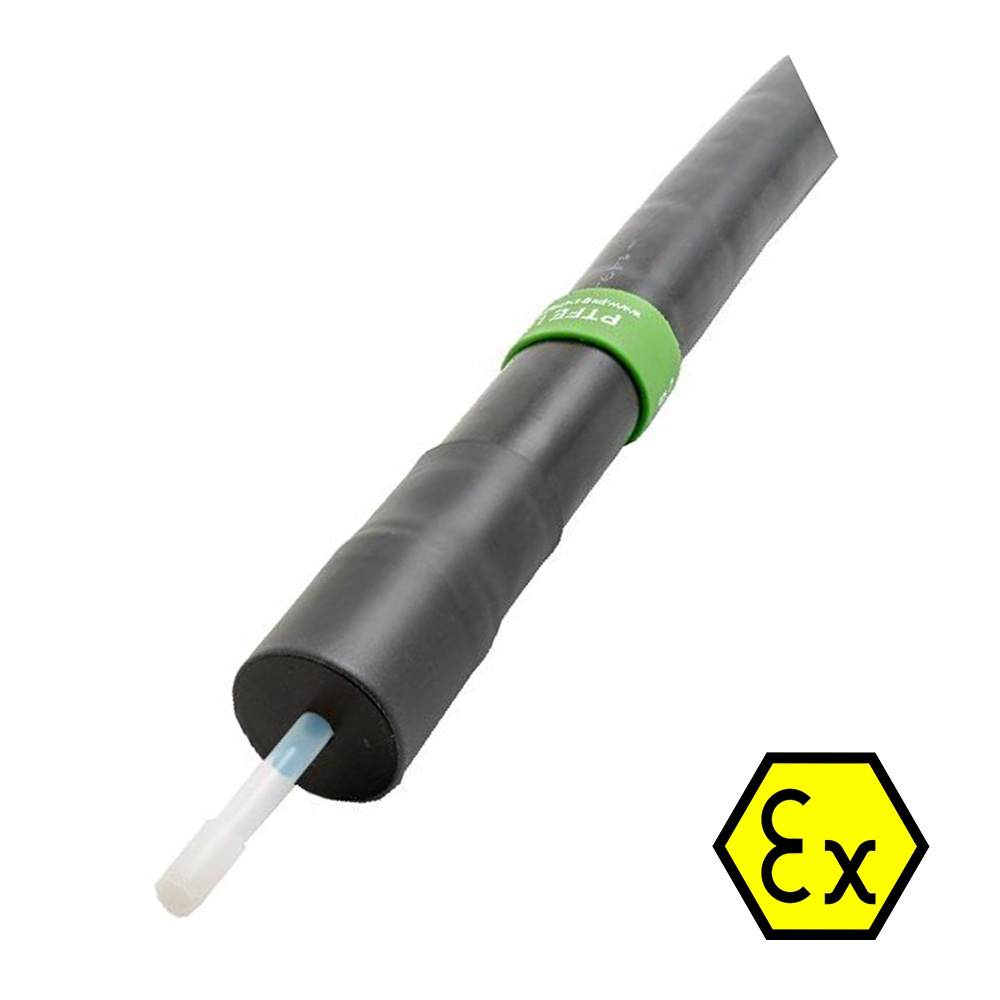
Controlled Sample Line up to 180°C holding temperature, cut-to-length with PTFE / PFA or stainless steel tubes, heating cable certified for ATEX Zone 1: II 2G Ex IIC und IEcEX
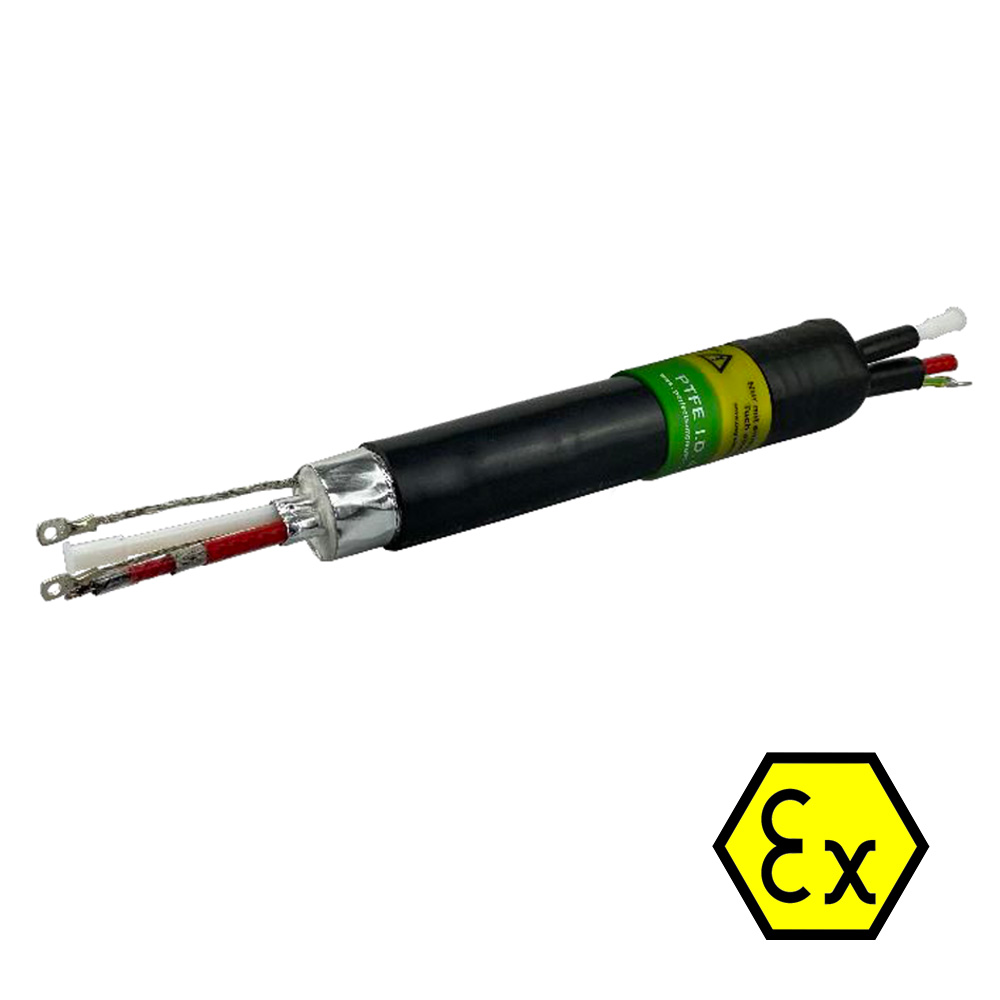
Controlled Sample Line up to 180°C holding temperature, cut-to-length with PTFE / PFA or stainless steel tubes, heating cable certified for ATEX Zone 1: II 2G Ex IIC und IEcEX
Self regulating Sample Line up to 120°C holding temperature, cut-to-length with PTFE / PFA or stainless steel tubes, fully certified for ATEX Zone 1: II 2G Ex IIB
Self regulating Sample Line up to 120°C holding temperature, cut-to-length with PTFE / PFA or stainless steel tubes, fully certified for ATEX Zone 1: II 2G Ex IIC
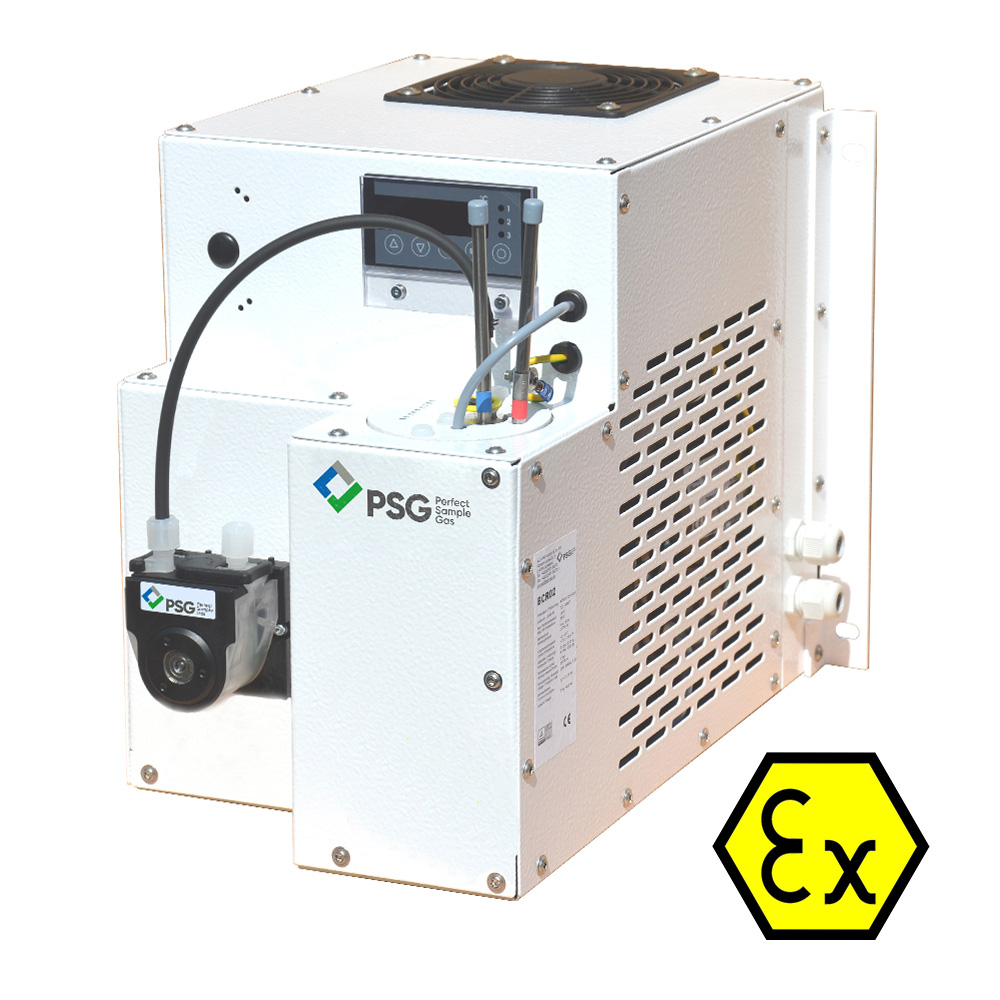
Compressor Cooler for Process Measurement (outlet dew point optimized), 1-2 Gas Path, Heat Exchanger in various Materials, flow rates up to 350 l/h for Atex-zone 2 (II 3G Ex nA nC T4 Gc)
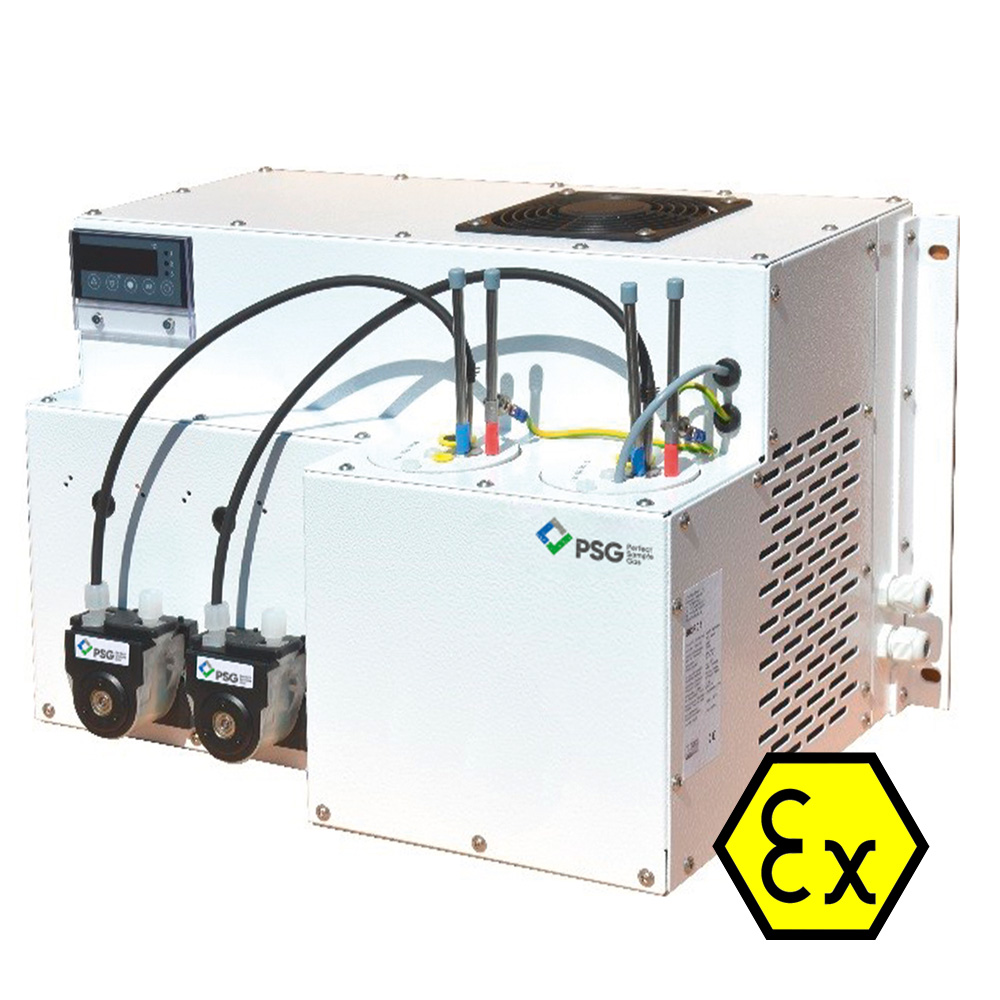
High Performance Compressor Cooler (outlet dew point optimized) with 1-4 Gas Path, Heat Exchanger in various Materials and flow rates up to 500 l/h
Compressor Cooler for Process Measurement (outlet dew point optimized), 1-4 Gas Path, Heat Exchanger in various Materials, flow rates up to 500 l/h for ATEX EX II 2G Ex px de [ai] IIC T4 Gb
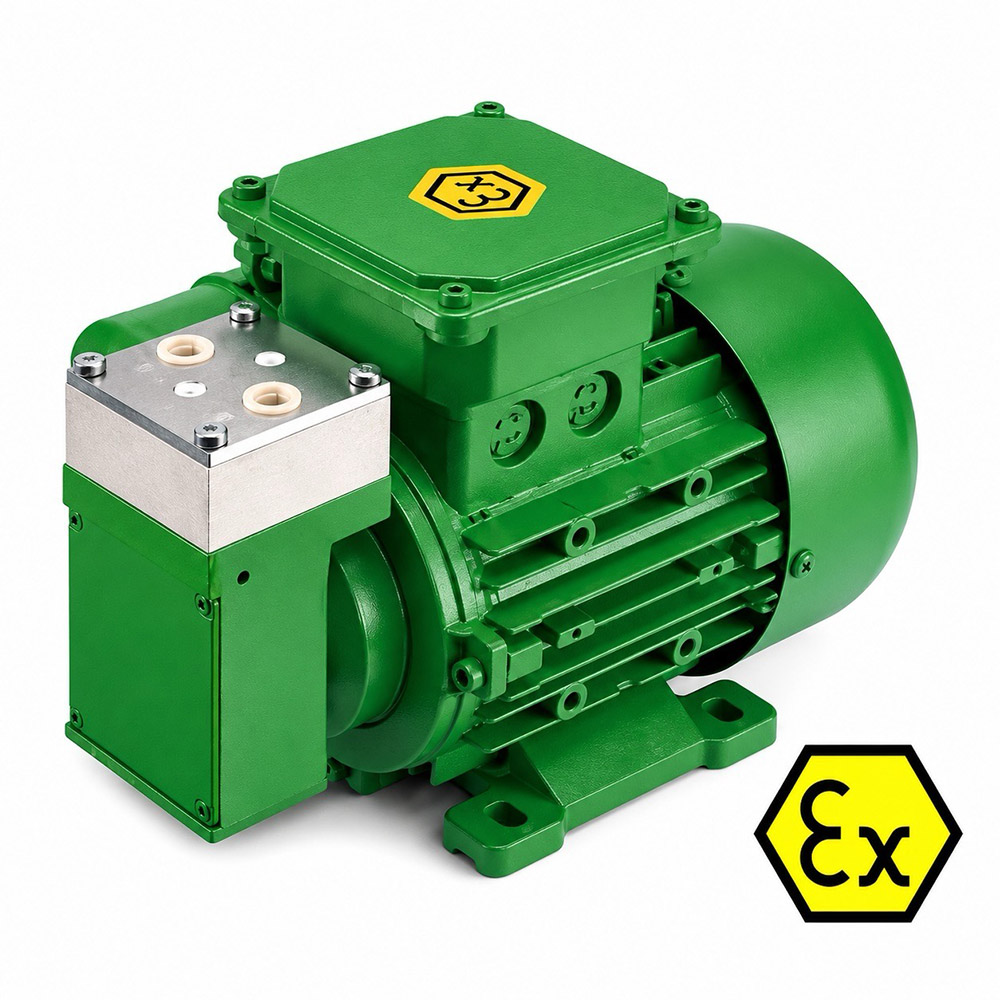
Corrosion resistant PTFE diaphragm sample gas pump for low maintenance operation and compact design 7.5 l/min. flow rate, Motor IP66, Pump IP55 for ATEX Ex II 2G Ex h IIB+H2 T4 Gb